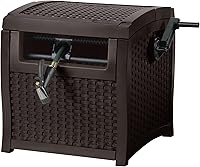
How to Fix Hose Reel Retract Spring
To fix a hose reel retract spring, first find out whether it's broken or just bound: if the spring is intact, unspool all the hose and let the spring rewind the empty reel, then check the swivel for leaks. A snapped spring can't be repaired and needs replacing.
On this page (8 sections)
- Is the problem the spring or something else?
- How do you release the tension safely?
- How do you reset a spring that's just bound?
- How do you replace a broken spring?
- How do you fit the swivel so the reel retracts smoothly?
- How do you set the spring tension after a repair?
- Why does the spring keep failing?
- Which parts should you keep on hand?
To fix a hose reel retract spring, first work out whether the spring has snapped or is just bound. If the spring is intact, pull the hose all the way out and let the empty reel rewind so the spring resets, then check the swivel for leaks.
A broken coil can't be repaired, so it has to be replaced.
The spring is only one part of the retract system. The swivel, hose length and even how you coiled the hose last time all affect whether the reel pulls back cleanly.
Check those before you open the spring housing.
Is the problem the spring or something else?
Most reels that stop retracting don't have a broken spring at all. A leaking swivel, a hose that's too long or an over-tightened spring is the usual cause.
Start by testing the tension. Pull the hose out a few feet and let go; if it creeps back, the spring is working and the fault lies elsewhere.
A reel that feels stiff and refuses to move may be bound or fully wound. A broken spring behaves the opposite way: the hose stays slack and you may hear the coil rattle in the housing.
Then look at the swivel where the hose meets the reel. A drip there means water is escaping before it reaches the hose, and the reel loses pressure on the retract path.
Our guide to how to fix leaking hose reel walks through the usual leak points.
Finally, check the hose. A longer or thicker hose than the reel was built for uses up the spring's turns early, so it stops short.
That's a setup problem, not a spring failure. A twist near the drum end does the same, because it stacks up and steals turns from the coil.
How do you release the tension safely?
Always unwind the spring before you touch the housing. A wound retract spring stores force and can snap open when the cover comes off.
Pull the hose out fully and lock the reel if it has a stop. On many carts the spring sits in a side housing with a cover; the maker's steps tell you how to let it down slowly.
Wear gloves and eye protection while the coil is exposed.
Keep fingers, sleeves and loose clothing away from the coil. Don't lever the cover off with a screwdriver while the spring is under load.
If the housing feels tense or the cover won't sit flat, stop and follow the maker's sequence.
Once the spring is relaxed, the housing opens without force. That's the point to inspect the coil for a break or rust.
Look at both ends: the inner hook that grabs the drum and the outer tab that anchors to the housing, since either one can let go without the wire itself snapping.
How do you reset a spring that's just bound?
Unspool the hose completely and let the spring rewind the empty reel, then feed the hose back on evenly. This resets a spring that was over-tightened or wound past its limit.
With the hose off, the spring should pull the drum back to its start position on its own. If it does, the spring is fine.
If the drum stays slack, the coil has likely broken or come off its anchor.
When you reload the hose, keep it flat and feed it in under light tension. Twists and kinks stack up on the drum and steal turns from the spring.
A hose guide helps here: it keeps the hose running in a straight line so it lays evenly. Learn what it does in our guide to what a hose guide does on a hose reel.
If the reel still only retracts partway after a full reset, the hose is probably too long for the drum. Shorten it or swap to a thinner hose that fits.
A hose left fully extended in the sun also weakens over time, so it can kink more on the way back in.
How do you replace a broken spring?
A snapped or rusted-through spring can't be repaired; it has to be replaced with the maker's part for your reel model. Measure the coil and check the housing before ordering.
Open the relaxed housing and lift out the broken coil. Note how the inner end hooks onto the drum and the outer end anchors to the housing; that's how the new one goes back.
Clean rust and grit out of the housing first. A drop of light oil on the coil helps it slide against the housing.
Fit the new spring as the maker describes, then wind it to the stated number of turns. Too few turns and the hose won't come all the way out; too many and it binds.
Reload the hose and test the retract with water off.
If the housing itself is cracked or the anchor is stripped, the reel is usually beyond an easy fix. Compare what the best garden hose reel offers before spending more on parts.
A new reel with a sealed spring housing outlasts a patched one.
How do you fit the swivel so the reel retracts smoothly?
The swivel has to turn freely and seal tight, or the hose drags and the spring fights the leak. Check it after any spring work.
A stiff or leaking swivel adds friction to the whole retract path. Unscrew it, check the threads and washers, and refit with fresh tape.
Our guide to how to attach a hose to a hose reel without leaks covers the thread and washer steps.
Replacement swivels are cheap and easy to fit. The right one depends on your reel's thread size and whether you need a straight swivel or an elbow.
The Awesir swivel has ½ in female NPT inlet and outlet threads and a 5000 PSI maximum pressure rating. Its 90 degree body reduces kinks and its ball bearing design lets the hose turn without twisting.
An external grease fitting lets you top up the bearing as needed. Its dual port female design means no extra adapters in most setups.
The HoseKit Super Swivel is also ½ in female NPT with a 5000 PSI maximum. The nickel plating suits water and mild corrosives.
The included MxM adapter widens what it fits, and HoseKit names models #5024 and 9SS8FP50xFP50 as direct replacements. The kit also includes a small keychain for identifying mesh filter sizes, which helps when you order spares later.
The SIGURANTA set gives you two brass swivels with 3/4 in GHT female and 1/2 in NPT male threads. The 360 degree rotation keeps the hose from tangling.
You also get two washers and a roll of sealing tape, so the whole swap can be done in one go. The solid brass body resists corrosion, which suits carts kept outdoors.
Which swivel fits your reel?
Match the thread type first. The Awesir and HoseKit units are ½ in female NPT on both ends, so they suit steel hose reels built for NPT fittings.
The SIGURANTA kit uses a 3/4 in GHT female end for a garden hose and a 1/2 in NPT male end for the reel, so it fits standard carts rather than industrial steel reels. If your reel already leaks at the joint, fit the swivel before you reopen the spring housing.
How do you set the spring tension after a repair?
Wind the spring only as far as the maker states, then test with the hose empty. Over-tightening is the most common reason a freshly fixed reel binds again.
Load the hose evenly and keep the last few feet slack so the spring isn't stretched flat against the stop. Run water through and pull the hose out to its full length once to check the retract is smooth.
Watch the hose as it winds back; if it climbs to one side of the drum, the spring is pulling unevenly and the hose needs re-laying.
If the reel jerks or stops short, let the tension down and reset rather than forcing it. A spring that's wound too far will bind or break sooner.
On a wall reel, also check that the hose guide sits square, since a guide that binds drags on the retract just like a stiff swivel.
Why does the spring keep failing?
Repeated failure usually points to a hose that's too long or too thick, or a swivel that's dragging and forcing the spring to work harder. Fix the cause, not just the spring.
Other culprits are grit and rust in the housing and a reel left fully extended in the sun. Rinse the housing occasionally and dry it, and store the hose retracted.
On steel reels, a nickel-plated swivel like the Awesir or HoseKit resists mild corrosion better than a bare fitting, so the joint keeps turning and the coil does less work.
If the spring has gone twice, the reel may simply be too small for your hose. A larger drum or a shorter hose solves it more cheaply than another replacement coil.
Check the anchor points too; a loose outer tab lets the coil shift and rub until it wears through.
Which parts should you keep on hand?
For most hose reel retract spring fixes, a spare spring for your model and a fresh swivel cover the job. Buy the swivel first if the reel still turns but leaks or drags.
Pick the Awesir if your reel takes ½ in NPT threads and you want a greaseable 90 degree swivel. Choose the HoseKit if you need the MxM adapter to fit an odd setup.
The SIGURANTA brass kit suits garden carts and gives you two swivels plus the sealing parts.
Check the thread size on your reel before ordering, since NPT and GHT threads don't match. Once the spring and swivel are sorted, a hose guide keeps the retract even and the spring lasts longer.
For the full picture on reel types, see our guide to what the best garden hose reel offers.
Frequently asked questions
Can you replace a retract spring yourself?
Yes, on most cart and wall reels the spring sits in a side housing you can open with basic tools. Follow the maker's steps, keep your face and hands clear of the coil, and wear gloves; a wound spring stores a lot of force.
How do I know if the spring is broken or just stuck?
Pull the hose out a few feet and let go. A working spring pulls it back; a bound one feels stiff and won't retract, while a broken one leaves the hose slack with no tension at all and may rattle inside the housing.
Why does my hose reel only retract partway?
The hose is usually longer or thicker than the reel was set for, so the spring runs out of turns before the end arrives. Unspool fully and let the spring rewind with no hose attached, then feed the hose back in evenly.
Can a stuck spring be dangerous?
Yes. A tensioned spring can snap open when the housing is opened and the coil can cut or strike.
Release the tension first as the maker describes, wear gloves and eye protection, and stop if the housing feels under load.
Is it worth fixing or should I replace the reel?
Replace the reel if the spring housing is cracked, the coil is badly rusted through, or the same spring has failed twice. A leaking swivel or a bound spring is worth fixing, since those are simple parts swaps.