How to Drain a Garden Hose for Winter
To drain a garden hose for winter, disconnect it, let the water run out downhill, and store it where it can stay dry and protected from freezing. Drain the reel and its connections too, following the maker's instructions.
On this page (6 sections)
To drain a garden hose for winter, disconnect it, let the water run out downhill, and store it where it can stay dry and protected from freezing. Drain the reel and its connections too, following the maker's instructions.
Even a hose that looks empty can hold water in low spots, fittings, or a reel. A careful drain and dry storage routine helps you avoid freeze damage and makes spring setup easier.
How do you drain a garden hose for winter?
Disconnect both ends and drain the hose from the high end toward the low end. Walk along it toward the outlet to move water through bends and low spots.
- Turn off the faucet and release pressure by opening the spray nozzle.
- Disconnect the hose from the faucet and nozzle, keeping the ends pointed down.
- Stretch the hose along a slope, with one end lower than the other.
- Lift and guide the hose from the high end toward the outlet to push out remaining water.
- Check the hose and fittings for water, then coil it loosely for storage.
Don't pull hard on stuck fittings or twist a connector until it binds. If your hose has a quick-connect or other special fitting, follow its instructions for removal.
Should you drain the hose before removing it from a reel?
Yes, drain the hose before winding it onto a reel for storage. A reel can hold water in loops, so turning the handle alone may not empty it.
If the hose is still attached, disconnect the faucet end and let water drain while you pull the hose out slowly. After most water runs out, guide the hose back onto the reel without tight kinks.
Our guide to rolling a hose onto a reel without kinks covers smoother coiling. If the hose isn't attached yet, see how to attach a hose to a hose reel.
How do you drain water from the reel and fittings?
Drain every part that can hold water, including the reel, inlet, and connectors. The exact steps depend on the reel design, so check its manual before opening covers or removing parts.
For a manual reel, leave the hose outlet low and turn the reel slowly to help water move out. For an automatic reel, avoid forcing the rewind mechanism; follow the maker's storage steps instead.
What if a hose reel has a built-in hose guide?
Move the hose through the guide slowly as you drain it. Check that it isn't pinched or caught, since a trapped section can retain water.
A hose guide helps direct the hose as it winds in, but it doesn't drain the hose by itself. Learn what a hose guide does if you want to understand how that part affects winding.
Do you need to remove the hose from the reel?
Remove it if the manual calls for separate storage or if you can't drain the reel while the hose is attached. Otherwise, drain it fully and store the reel in a sheltered, dry place.
Don't take apart a retractable reel or sealed housing unless its instructions explain how. If the hose stays on the reel, make sure it isn't wound tightly around water-filled low points.
Where should you store a drained hose and reel?
Store the hose and reel dry, sheltered, and out of freezing conditions when possible. A shed or garage can work if it stays dry and the hose isn't exposed to sharp edges or heavy objects.
Coil a loose hose in broad loops, then secure it without crushing or sharply bending it. Keep fittings clean and dry, and avoid leaving the hose where vehicles, tools, or foot traffic can damage it.
The garden hose winter storage ideas guide covers storage approaches for reels and carts. If you need a setup overview before choosing a place, see garden hose reels explained.
Can a hose reel box help with winter storage?
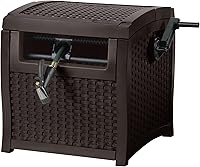
A hose reel box helps keep the hose contained and out of sight near the spigot. The Suncast 100 Ft Hose Hideaway holds up to 100 ft of standard 5/8 in vinyl hose, uses a manual side crank, and has resin construction.
Drain the hose before winding it in for winter storage. This box is not a substitute for protecting the hose from freezing conditions.
Is a cover useful for a hose reel left outside?
A cover can shield a reel from sun, rain, and dust, but it cannot replace draining or indoor storage. The KUAINICE Hose Reel Cover is made from double-sided Oxford spun fabric and is sized for a 5/8 in hose holder with 50–100 ft capacity.
Measure your reel before choosing a cover, since its stated fit is for a particular size range. Put it on only after the reel is drained and dry, and see whether a hose reel cover is needed for winter.
How can you tell if a hose is drained?
Look for water leaving the outlet, then check bends and fittings for trapped water. Lift low sections as you work so water can flow toward the open end.
A hose may still contain a small amount of water even when the main flow stops. Keep the end pointed down for a little longer, and don't store the hose in a tight coil if water is still dripping.
A flexible hose can be easier to move through a yard while draining. The Giraffe Tools 5/8 In 100 Ft Hybrid Hose is a 100 ft polymer hose with reinforced ends and swivel handles.
Use the fittings carefully and let water drain before coiling it for storage. A hose's materials or stated outdoor use don't guarantee it can safely stay full of water in freezing weather.
What winter storage mistakes should you avoid?
Don't store a hose or reel with water trapped inside, and don't assume a cover prevents freezing. Water can remain in loops, fittings, and reel housings after the visible flow stops.
Avoid tight coils that flatten the hose, heavy objects on top of it, and leaving fittings exposed to dirt or moisture. Don't use heat to thaw a frozen hose or reel; wait for it to warm naturally and check the maker's guidance.
If a reel leaks at its connection before winter, see how to fix a leaking hose reel. If your hose needs to be removed from an automatic reel, read how to replace a hose on a retractable reel.
What is the simplest winter checklist?
Turn off the faucet, disconnect both hose ends, drain the hose downhill, drain the reel, and store everything dry. Check the reel instructions for model-specific steps before covering or removing components.
Choose indoor or sheltered storage when available, especially where freezing temperatures are likely. Pick a hose box if you want contained storage by the spigot, or a cover if the reel must remain outside and is already dry.
When spring comes, reconnect the hose and check the fittings for leaks before watering. For a new installation, use the hose reel mounting guide to review wall and post placement.
Frequently asked questions
How do you drain a garden hose for winter?
Turn off the water, disconnect the hose at both ends, and stretch it out on a slope so water can drain from the low end. Walk the hose toward the outlet to push out trapped water, then coil it loosely for storage.
Check the reel manual for any separate draining steps.
Should you leave a hose reel outside in winter?
That depends on the reel's materials and the maker's care instructions. Drain the hose, reel, and connections first, then store them in a sheltered place if possible.
If the reel must stay outside, keep it covered only after it is dry and use a cover that fits without trapping moisture.
Can a hose cover keep water from freezing?
No. A cover can shield a reel from sun, dust, or rain, but it doesn't remove water inside the hose or guarantee freeze protection.
Drain the hose and reel before covering them, and store them where they won't be exposed to freezing conditions when possible.
Do you need to drain a retractable hose reel?
Yes, remove water from the hose and reel before freezing weather, and follow the reel maker's instructions for its housing and connections. Don't force a rewind or open a sealed housing unless the manual says how.
See our guide to fixing a retractable hose reel for rewind issues.