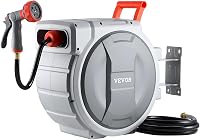
How to Roll a Hose Onto a Reel Without Kinks
To roll a hose onto a reel without kinks, straighten it first, then wind it in even loops while guiding it across the reel. Keep the hose relaxed, and stop to remove twists instead of winding them in.
On this page (8 sections)
- How do you roll a hose onto a reel without kinks?
- What should you do before winding?
- How do you wind the hose evenly?
- What should you do if the hose starts to kink?
- Which reel features can make winding easier?
- How do you roll a hose onto a cart safely?
- How should you store the hose after winding?
- Which method should you use to roll a hose on a hose reel?
To roll a hose on a hose reel without kinks, straighten it first, then wind it in even loops while guiding it across the reel. Keep the hose relaxed, and stop to remove twists instead of winding them in.
A clear path and a slow, steady crank make the job easier. If the hose is full of water, drain it first when practical; Giraffe Tools specifically advises against winding a water-filled hose onto its cart.
How do you roll a hose onto a reel without kinks?
Lay out the hose with the twists removed, then wind it in even layers across the reel. Keep light tension on the hose so it feeds neatly, but don't pull hard enough to stretch or sharply bend it.
- Turn off the water and disconnect or release the hose as your reel instructions direct.
- Walk the hose out along a clear path, lifting any crossed or twisted sections.
- Drain the hose if practical, then place its end at the reel's guide or drum.
- Crank slowly while guiding the hose from one side of the reel to the other.
- Pause if the hose twists, catches, or forms a sharp bend; correct it before continuing.
- Leave the hose arranged without forcing the last loop into a tight space.
Keep your fingers clear of moving parts and pinch points. If the reel resists, stop and check for a snag instead of adding force.
What should you do before winding?
Check the hose path, reel, and hose end before you start. A few seconds of setup can prevent a twist or snag from getting buried in the coil.
Move the hose away from shrubs, furniture, wheels, and sharp corners. Straighten sections that loop around themselves, and remove dirt or debris that could catch as the hose travels toward the reel.
If you have just watered, shut off the water and release pressure according to the reel's instructions. Drain the hose where possible.
Giraffe Tools says not to wind a water-filled hose onto its cart, so follow that guidance for that model.
For a new hose connection, see how to attach a hose to a hose reel without leaks. A secure, correctly routed connection helps keep the hose moving freely.
How do you wind the hose evenly?
Guide the hose across the reel instead of letting it pile up in one spot. Slow cranking gives you time to notice a crossing or tight bend before it becomes part of the coil.
On a manual reel, turn the crank at a steady pace and use your free hand to guide the hose if the design allows it. Keep your hand away from the drum and any gears or pinch points.
On a cart, stand where you can see the reel and the hose path. Keep the cart stable, and avoid pulling the hose at an angle that might move or tip the cart.
Don't force each loop tightly against the previous one. A relaxed, even coil is easier to pull out next time than a compact tangle.
Can a hose guide help prevent kinks?
A hose guide can help keep the hose moving across the reel as you wind. It can improve the hose's path, but it won't untwist the hose for you.
The Giraffe Tools 200 Ft Hose Cart includes a hose guide system and a non-slip winding handle. Its stated capacity is 150 ft of 5/8 in hose or 200 ft of 1/2 in hose, with a 5 ft lead-in hose.
Before choosing a cart, match its stated capacity to your hose diameter and length. See what a hose guide does on a hose reel for more on how guides work.
What should you do if the hose starts to kink?
Stop winding and loosen the hose as soon as you see a sharp bend. Back off the crank if needed, then straighten the hose by hand before continuing.
Don't pull the kink tight or keep cranking over it. That can trap the bend under later loops and make the hose harder to unwind.
If the hose repeatedly twists, lay out a longer section and remove any loops before restarting. Also check whether the hose is catching on the reel frame, cart, or nearby objects.
For a reel that won't move or rewind as expected, use our guide to how to use a hose reel. Retractable reels may require a different approach from manual cranks and carts.
Which reel features can make winding easier?
A comfortable handle, a clear hose path, and a guide that suits your reel can make winding simpler. Choose based on where you use the hose and how you prefer to store it.
The VEVOR 250 Ft Hose Reel Cart has a non-slip handle, four solid wheels, and a storage basket. VEVOR gives its capacity as up to 250 ft of 5/8 in hose; the hose is not included.
A cart gives you mobility, while a wall reel stays in one spot. If you need help comparing storage styles, read garden hose reels explained: wall, cart, crank and box.
For a wall-mounted option, the Liberty Garden 712 Navigator has a pull-up knob that lets its carriage rotate 360 degrees, then secure in one of eight positions. It holds up to 125 ft of 5/8 in hose, and mounting hardware is not included.
Whichever reel you use, check that the hose capacity matches your hose. A reel that is too full can leave little room for neat, relaxed loops.
How do you roll a hose onto a cart safely?
Keep the cart stable and wind the hose slowly, with the wheels on a firm surface. Stop if the cart shifts, tips, or the hose catches.
The VEVOR cart has four solid 10 in wheels and a low center of gravity, according to its product details. The Giraffe Tools cart has two solid knobby tires and a low center of gravity; its stated hose capacity depends on hose diameter.
Don't use a moving cart as an anchor while pulling hard on a hose. Set it where you can reach the crank without leaning over the reel or placing your hands near the drum.
How should you store the hose after winding?
Leave the hose in loose, even loops and store the reel as its instructions direct. Drain the hose before winter storage when appropriate, and protect the reel from conditions its maker warns against.
Avoid leaving a tight kink trapped at the outer edge. When you next use the hose, pull it out slowly and check that it unwinds without catching.
For regular care and storage ideas, browse the hose carts category. If your reel needs a setup change, how to install a hose reel on a wall or post covers placement and mounting.
Which method should you use to roll a hose on a hose reel?
For a manual reel or cart, straighten the hose, drain it when practical, and guide it across the drum in relaxed loops. Pause to fix twists instead of winding them into the coil.
Choose the Liberty Garden 712 Navigator if a wall-mounted rotating carriage suits your space. Choose the VEVOR cart for a four-wheel cart with a non-slip handle, or the Giraffe Tools cart if its hose guide and capacity fit your hose.
For smoother use, start with how to use a hose reel.
Frequently asked questions
How do you roll a hose onto a reel without kinks?
Straighten the hose, remove twists, and wind it in even loops while guiding it across the reel. Keep the hose relaxed instead of pulling hard, and pause if a kink starts to form.
Follow the reel's instructions, since the winding method can vary by design.
Should you wind a hose onto a reel with water in it?
Drain the hose first when you can, especially on a cart whose instructions say not to wind a water-filled hose. Close the water source, release pressure as directed, and let water drain before winding.
This also makes the hose easier to handle.
What does a hose guide do on a reel?
A hose guide helps direct the hose across the reel as you wind it, which can make even winding easier. It doesn't remove twists already in the hose, so straighten the line first and guide it without forcing it against the reel.
Why does my hose kink while winding?
A hose may kink when it has a twist, is pulled too tightly, or catches on the reel or ground. Stop winding, loosen the hose, and work the bend out by hand.
Check that the hose path is clear before starting again.