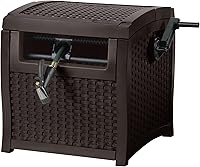
How Does a Garden Hose Reel Work?
A garden hose reel works by winding the hose around a rotating drum, with a swivel fitting that lets water flow while the drum turns. You pull hose out to water, a lock holds the length you need, and a rewind system or a hand crank rolls it back for storage.
On this page (9 sections)
- How does a garden hose reel work to store and feed a hose?
- Which parts do the pulling and the locking?
- What makes a reel rewind by itself?
- How does water get from the tap to the far end of the hose?
- Why does a hose reel have a swivel bracket?
- What changes when the reel is a hand-crank model?
- How do you work a garden hose reel without kinking the hose?
- Is a wall reel or a hose cart the better fit?
- How do you keep a reel working through the seasons?
A garden hose reel works by winding the hose around a rotating drum, with a swivel fitting that lets water flow while the drum turns. You pull hose out to water, a latch holds the length you need, and a rewind system or a hand crank rolls it back for storage.
That short chain of parts explains most of what you see in a yard, from a plain steel wall reel to a spring-loaded retractable unit. Here is how each stage does its job.
How does a garden hose reel work to store and feed a hose?
It stores the hose on a drum and feeds it out through a guide. The drum is the core: a cylinder wide enough to hold the hose in a single layer of coils, mounted on an axle so it turns freely.
Water doesn't fight the spinning drum because of the swivel, a joint that spins with the drum while the supply line stays still. A seal inside keeps the two halves watertight, and that seal is the part that decides whether a reel leaks.
Guide arms, rollers or a track steer the hose on and off in neat layers. When you pull, the drum turns one way; when you rewind, it turns back, and the guide spreads the hose so it doesn't pile up and jam.
A stop mechanism completes the loop. In a manual reel, that is your hand holding the crank.
In an automatic one, a ratchet holds the drum still so the hose stays where you left it.
Which parts do the pulling and the locking?
A ratchet and a trigger handle do both jobs. The ratchet is a toothed wheel with a pawl that catches the teeth, and the trigger controls whether the pawl engages.
Pull the hose out slowly and the pawl clicks over each tooth, so the hose stays put when you stop. That is what lets you water halfway across the lawn without the hose creeping back.
To rewind, you release the pawl. On a manual reel you turn the crank.
On an automatic reel a spring inside the drum is already wound up, so a short, sharp tug of about 4 in is enough to trigger it, and the drum takes the hose back. GLAHODEN says its ratchet lock is built to hold a set length within about 0.65 ft.
Giraffe Tools calls the same idea any length lock, and both let you pull only the hose you need.
What makes a reel rewind by itself?
A coiled spring inside the drum, wound up as you pull the hose out. Every foot of hose you draw turns the drum and tightens the spring, which stores that energy.
Let the ratchet go and the spring unwinds, spinning the drum and pulling the hose back. A guide keeps the coils even, and a speed control slows the drum so the hose doesn't whip around.
The trade-off is that the spring has to match the hose weight. A long, heavy 5/8 in hose needs a stiffer spring than a light 1/2 in one, which is why auto-rewind units usually come with their own hose fixed on the drum.
Brands handle the return differently. GLAHODEN says its self-winding reel retracts 20% slower to cut whipping and reaches full storage 90% faster than turning a crank by hand.
How does water get from the tap to the far end of the hose?
Through a fixed inlet, a spinning swivel joint and the hose itself. The tap connection stays still while the drum turns, and the swivel is what separates the two.
A short lead hose links the tap to the swivel, usually 5 ft long with a 3/4 in fitting. The swivel body turns with the drum on one side and seals against the standing side, so water flows through a joint that is always rotating.
The main hose sits on the drum and connects at the hub. From there it runs out through the guide to the nozzle, and the water only needs the pressure from your tap to reach the end.
Two seals in the swivel do the leak-proofing, and they wear out first. Many units ship with spare seals and a roll of thread tape, and swapping a seal is the usual fix when a reel starts dripping at the joint.
Why does a hose reel have a swivel bracket?
The bracket lets you aim the drum where you're standing. A fixed frame would force you to drag the hose around the post, which kinks it and puts side load on the fittings.
A swivel mount turns the whole assembly, so you can water the far side of the wall or the near side without moving the hose around a corner. Most wall reels swing about 180°.
The bracket also takes the weight. A loaded reel of 100 ft of water-filled hose can weigh a lot, so the mount needs solid anchors: Giraffe Tools uses two anchor points rather than one to keep the unit steady during a pull.
Makers list drill sizes for a reason. Giraffe Tools asks for a 7/16 in or 3/8 in bit for wall fixing and 5/16 in for a wooden post, drilled about 2 in deep, and it recommends a post larger than 4x4 for a stable base.
What changes when the reel is a hand-crank model?
Nothing in the water path, and everything in the effort. A manual reel still has a drum, a swivel and a guide, but a crank and your arm replace the spring.
The crank gives you direct control. You can stop mid-turn, feel resistance from a kink, and let the hose settle before winding on, which suits anyone who wants to see the coils going back neatly.
Manual reels are usually sold empty, so you keep your own hose. That is the main reason to choose one: you pick the length and quality, and the reel just holds it.
Cranks do take time, and you walk the hose back as you turn. A 100 ft hose at the end of a long watering session is a few minutes of winding, where a spring unit does it in a fraction of the time.
How do you work a garden hose reel without kinking the hose?
Pull steady, keep the guide clean and walk the hose back as it winds. Kinks come from pulling at an angle or forcing the hose onto the drum in a heap.
Start by opening the nozzle, since a closed one traps pressure and makes the hose stiff. Pull out enough to reach your work area and stop; the lock holds it.
On the way back, guide the hose into the middle of the drum rather than one side, and let the reel take it in slowly. If your model has a slow rewind, use it.
Keep the guide track and rollers free of grit, and check that the hose sits in the guide rather than beside it. A hose that jumps the guide will lay unevenly and jam on the next pull.
If the reel is new to you and you want the full pull, lock and rewind routine step by step, the site's guide covers it in detail.
Is a wall reel or a hose cart the better fit?
A wall reel suits a fixed tap and a tidy wall; a cart suits a large yard with beds all around. Both use the same drum and swivel, so the choice is about where the hose needs to go.
A wall reel keeps the hose off the ground and out of the way, which suits a patio, a narrow side path or a garage wall. It needs solid anchoring and a reachable tap.
A cart rolls to the work. That saves dragging a long hose across beds, and there is no wall to drill, but the cart itself has to be wheeled back and stored.
If you're still deciding which type and size suits your setup, our guide to what is the best garden hose reel sorts the options by yard and tap. Readers who want the extra reach of a thicker hose can compare 5/8 retractable garden hose reel picks.
How do you keep a reel working through the seasons?
Drain the hose before cold weather, and store the unit as the maker advises. Water left in the drum or swivel can freeze and split a seal, and that is the most common way a reel fails.
Giraffe Tools suggests storing the reel indoors and draining the water out of the hose. GLAHODEN fits a quick-release handle for lifting the unit off its bracket for compact storage.
A UV-resistant shell helps in summer, but the hose and seals still take the wear. Rinse grit off the guide, check the swivel for drips, and replace a worn seal rather than tightening the joint harder.
For colder months, our guide to garden hose winter storage ideas covers draining, coiling and indoor storage for both reels and carts. If you would rather build than buy, see how to make a garden hose reel.
A garden hose reel works because four simple parts do the job: a drum to hold the hose, a swivel to pass water, a lock to hold the length, and a spring or crank to bring it home. Pick an automatic unit for speed, a manual reel for your own hose and full control, and either one will keep the hose off the ground and out of the way.
Frequently asked questions
Do you need to turn off the water before rewinding a hose reel?
No for most reels, as long as the nozzle is open. A closed nozzle traps pressure in the hose, which makes a spring-driven rewind fight back.
Open the sprayer, give a short tug if the reel is automatic, and walk the hose back as it rolls.
What size hose fits a wall-mounted reel?
It depends on the drum. A retractable unit usually ships with its own hose, so the size is fixed.
A manual steel reel is sold empty and takes a stated capacity, such as 125 ft of 5/8 in hose on the Liberty Garden 708.
Can a hose reel stay outside all winter?
Some can, and some cannot. A model with a UV-resistant and freeze-proof housing is built for cold weather.
Most makers still suggest draining the hose and storing the unit indoors for the coldest months, so check the advice for your model before the first hard freeze.
What is the difference between a hose reel and a hose cart?
A reel has a fixed frame that mounts on a wall, post or the ground, and it turns on a swivel joint. A cart carries the same drum on wheels, so you can move it around the yard.
Reels save space; carts save lifting and let you reach beds far from a tap.